
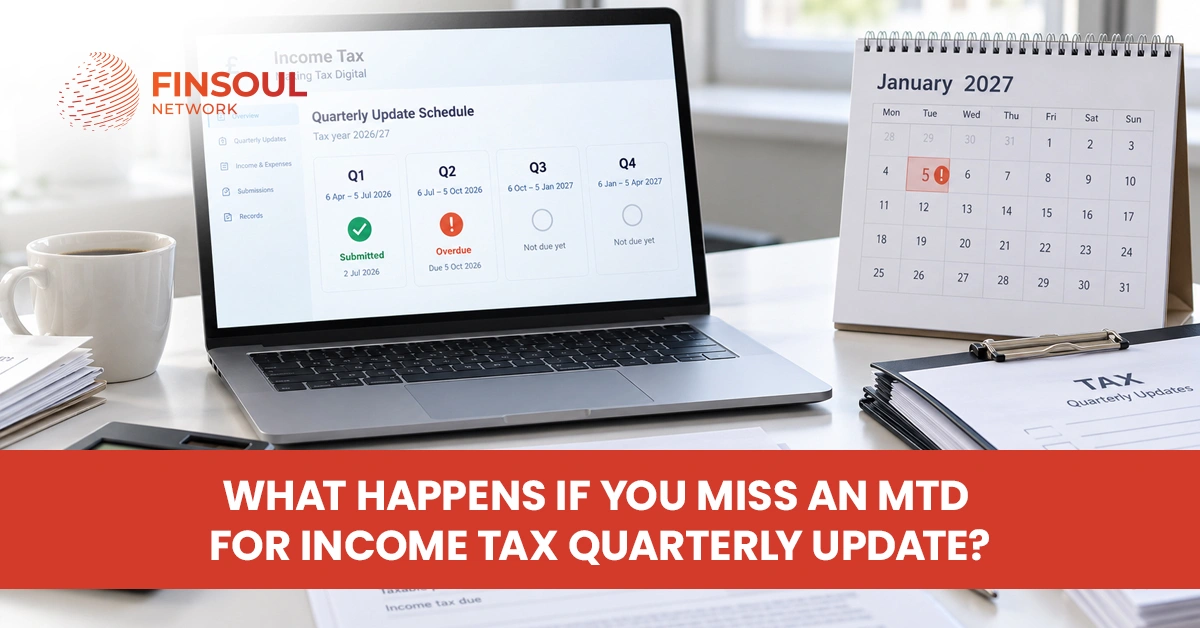
A missed MTD quarterly update can leave sole traders and landlords worried about penalties, tax returns and their HMRC obligations. The good news is that you can take practical steps to correct the situation and prepare for your next submission. The rules also depend on the tax year, so you should understand the difference between the 2026/27 transition period and the penalty rules that follow.
Online Accounting Services UK can help taxpayers manage digital records, submit quarterly updates and keep track of upcoming deadlines. This guide explains what happens after a missed deadline, how HMRC handles penalties and what you should do next.
Will HMRC Fine You for a Missed MTD Quarterly Update in 2026/27?
The rules depend on the tax year and your status under Making Tax Digital for Income Tax Self Assessment (MTD ITSA).
For the 2026/27 tax year, HMRC will not issue penalty points for late quarterly updates. However, you must still send all required updates before you can submit your MTD tax return. HMRC can still apply the relevant penalties for late tax returns and late tax payments.
If you have missed a deadline, do not ignore it just because HMRC has paused quarterly penalty points during the first year. Check your records, prepare the missing figures and submit the update through approved software.
The rules change from 2027/28 for taxpayers who must use MTD. HMRC will then apply its points-based system to late quarterly submissions. You should understand the difference so you can plan your bookkeeping and avoid future problems.
What Are the MTD for Income Tax Quarterly Deadlines?
HMRC requires taxpayers to submit four quarterly updates during each tax year. Each update summarises income and expenses from the start of the tax year to the end of the relevant reporting period. You do not report only the transactions from the latest three months.
Standard Reporting Periods
The standard deadlines are:
| Reporting period | Submission deadline |
| 6 April to 5 July | 7 August |
| 6 April to 5 October | 7 November |
| 6 April to 5 January | 7 February |
| 6 April to 5 April | 7 May of the following tax year |
Calendar Update Periods
If your accounting year runs from 1 April to 31 March, you can use calendar update periods instead. These cover 1 April to 30 June, 1 April to 30 September, 1 April to 31 December and 1 April to 31 March. The submission deadlines remain the same. You must select calendar periods in your software before sending your first update for the tax year.
Check the periods shown in your software before submitting figures. The correct reporting period helps you avoid missing transactions or sending inaccurate totals.
How Do HMRC Penalty Points Work for Late Quarterly Updates?
From the 2027/28 tax year, taxpayers who must use MTD will receive one penalty point for each missed quarterly update deadline. HMRC will not normally charge the £200 fixed penalty for a single late quarterly update.
The Points System Explained
The system works as follows:
| Penalty points | What happens |
| 1 point | HMRC records one late submission |
| 2 points | Your total reaches two points |
| 3 points | Your total reaches three points |
| 4 points | HMRC charges a £200 penalty |
| Further missed deadlines | HMRC charges another £200 for each subsequent late submission |
You can receive only one point for a deadline, even if you submit multiple business updates late for that same deadline. HMRC also keeps separate points totals for different tax obligations, such as Income Tax and VAT.
The late submission penalty points system gives taxpayers time to correct their filing habits before they reach the financial penalty threshold. However, repeated missed deadlines can lead to additional charges once you reach that threshold.
What Are the MTD ITSA Penalties for Late Updates, Tax Returns and Payments?
These penalties cover different failures, so you should not treat every penalty as a charge for a missed quarterly update.
- Late quarterly updates: HMRC will not issue quarterly penalty points during 2026/27. The points-based rules apply to required users from 2027/28.
- Late tax returns: Missing the annual tax return deadline can lead to a separate penalty under the applicable rules.
- Late tax payments: If you fail to pay tax by the due date, HMRC may charge late payment penalties and interest.
- Repeated late submissions: Once you reach the applicable penalty point threshold, HMRC can charge £200 for the relevant failure and each later missed deadline.
HMRC sets separate rules for late submissions and late payments. Paying your tax bill on time does not excuse a late return, and submitting your return does not remove interest or penalties on unpaid tax.
For this reason, check your HMRC account and read each notice carefully. Identify the deadline, the type of failure and the action HMRC expects from you.
What Should You Do If You Miss a Quarterly Update?
Act promptly when you discover you have missed a deadline. You can often resolve the problem by completing your records and sending the overdue information through your software.
Steps to Catch Up
- Check the missed deadline. Confirm the reporting period and the date HMRC expected your update.
- Review your income records. Gather sales invoices, bank transactions, rental income records and other relevant documents.
- Check your business expenses. Review receipts, supplier invoices and eligible expense records before calculating your totals.
- Correct any missing entries. Update your digital records so your figures reflect the transactions for the reporting period.
- Submit the outstanding update. Use your approved MTD submission process and check for confirmation.
- Review your next deadline. Add a reminder so you can prepare the next update before the due date.
Remember that each quarterly update includes cumulative figures from the beginning of the tax year. You generally do not need to resend every earlier update simply because you missed one deadline. Correct your records and submit the appropriate figures for the relevant period.
If you cannot submit the update, check your software provider’s guidance and contact HMRC when necessary. Keep evidence of any technical problem or other circumstances that affected your submission.
How Can Sole Traders and Landlords Avoid Missing Updates?
The MTD for income tax 2026 rules require affected taxpayers to maintain digital records and send quarterly updates using approved software. Good record-keeping helps you meet these obligations without leaving all your work until the deadline.
Keep Business Records Up to Date
Sole trader quarterly updates require accurate income and expense totals. Record transactions regularly, check bank entries and organise receipts throughout the reporting period. This approach reduces the amount of work you must complete before each deadline.
If you run several businesses, keep each business’s records clearly separated. Check that you include the correct income and expenses in each relevant update.
Keep Rental Records Organised
Landlord MTD requirements apply to qualifying property income when the taxpayer falls within the rules. Keep records of rent received, allowable property expenses and relevant invoices. If you own several rental properties, organise the records so you can check each property’s figures before submitting your update.
Choose Software That Supports Your Reporting Needs
MTD compatible software lets you maintain digital records and submit quarterly updates to HMRC. Check that the software supports your income sources, reporting periods and required submissions.
Before choosing a provider, check its reporting features, support arrangements and costs. Ask your accountant or software provider to explain how the system handles corrections, missing transactions and submission confirmations.
These steps help sole traders and landlords manage their reporting duties throughout the year rather than rushing to prepare records just before a deadline.
Can You Appeal an HMRC Penalty for a Missed Update?
If HMRC issues a penalty that you believe is incorrect, read the notice and check the relevant submission history before responding.
When You May Have Grounds to Challenge
You may have grounds to challenge a penalty if the records show that you submitted the update on time or HMRC applied the rules incorrectly. If exceptional circumstances prevented you from meeting a deadline, explain what happened and provide supporting evidence.
Evidence You Can Provide
Your evidence might include:
- Software error messages
- Correspondence with your software provider
- Records of circumstances that affected your ability to submit the update
Follow the appeal instructions in the HMRC notice and meet the stated response deadline. HMRC will consider the information you provide, but an appeal does not guarantee that it will remove the penalty.
For a late update during 2026/27, remember that HMRC will not issue quarterly penalty points. You should still complete the outstanding update and address any separate penalty notices relating to tax returns or payments.
Conclusion
A missed MTD quarterly update does not always lead to an immediate fine. HMRC will not issue quarterly penalty points during 2026/27, but you must still complete outstanding updates before filing your MTD tax return. From 2027/28, required users will face a points-based system that can lead to £200 penalties.
Keep your records current, check your deadlines and submit missing information promptly. Online Accounting Services UK can help you manage quarterly reporting, maintain digital records and prepare for your tax obligations.
Need Help With Your MTD Quarterly Updates?
If you struggle to maintain digital records, track deadlines or submit quarterly figures, Online Accounting Services UK can help you manage your bookkeeping and MTD reporting responsibilities. Contact the team to discuss accounting support for your business or rental income.
FAQs
Can I Submit a Quarterly Update After the Deadline?
Yes. Submit the outstanding update as soon as possible. During 2026/27, HMRC will not issue penalty points for late quarterly updates. The rules change for required users from 2027/28.
Will One Missed Quarterly Update Cost Me £200?
Not normally. Under the points-based rules for required users from 2027/28, one missed deadline gives one penalty point. HMRC charges £200 when you reach four points, with further £200 penalties for later missed deadlines.
Do I Still Need to Submit an Update If My Business Had No Income?
Yes. You must submit the required quarterly update even if you had no income or expenses during the period. Keep the relevant records and report the figures through your software.
Do Quarterly Updates Replace My Annual Tax Return?
No. Quarterly updates do not replace your annual tax return. You must complete the required updates before submitting your MTD tax return, and you must meet the separate filing and payment deadlines.
What Should I Do If My Software Will Not Submit an Update?
Check your internet connection, software status and reporting period. Contact your software provider if the problem continues. Keep evidence of the issue and contact HMRC if you cannot resolve the submission problem.